The vineyards

Nineteen hectares around the house

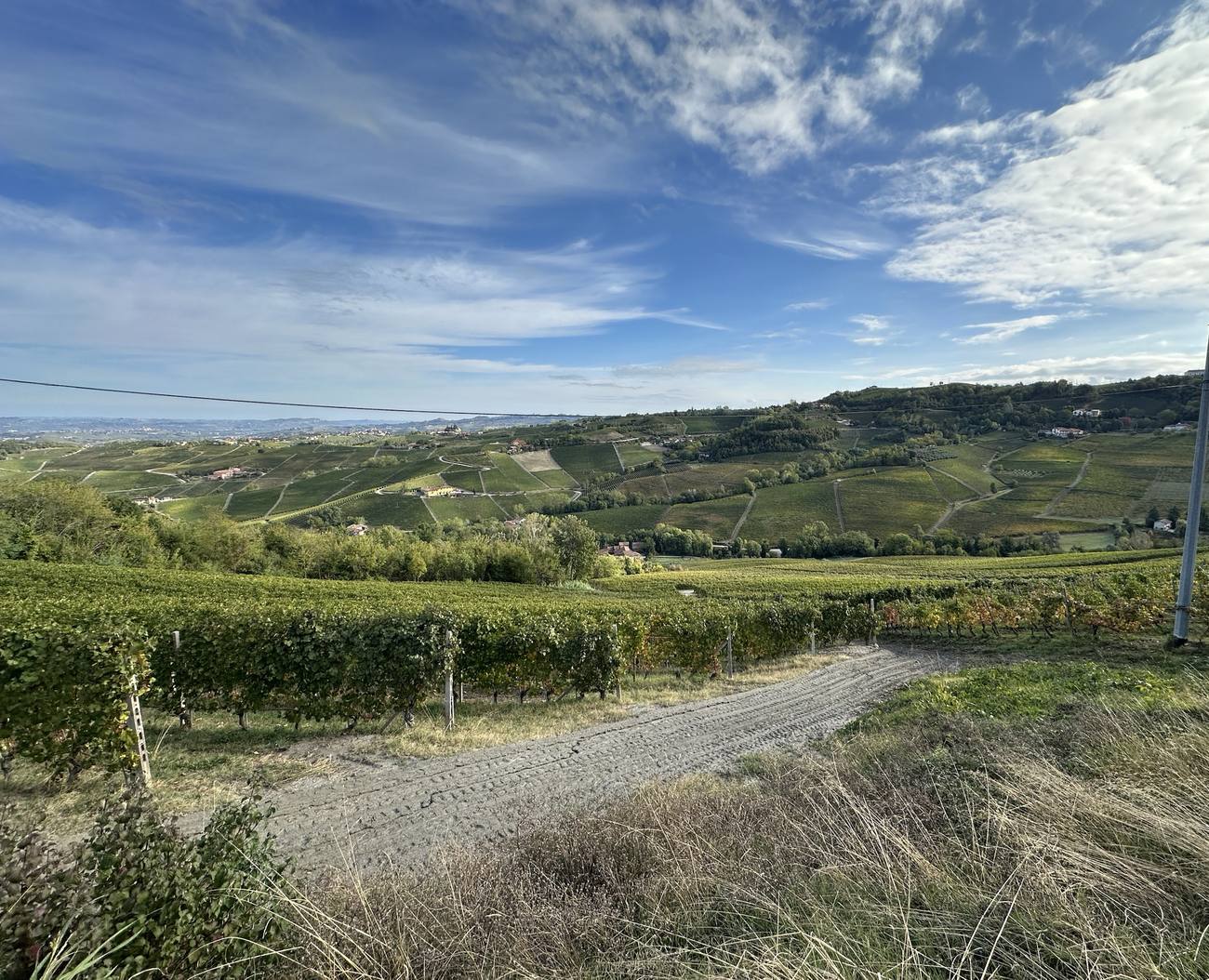
We don’t have vineyards scattered across the Langhe: they’re all here, on the hill where we live, inside two of the eleven official crus of Monforte d’Alba — the Barolo village with the greatest variety of terrain, altitudes and exposures.

In short

Where our wines are born

19Hectares of vines
2Official crus (MGA)
80%Nebbiolo
250–520Metres above sea level
Where the vineyards are

The plots, one by one

Twenty-four plots on three slopes, drawn in their real positions and all to the same scale. The contour lines tell the rest: the farmhouse sits at four hundred metres, Tantesi straddles the ridge and Corsini runs down the opposite side. It’s the same thing we say in words — two slopes, two different wines — but here you can see it.

SAN GIOVANNISAN GIOVANNI BRICCO SAN PIETRO · TANTESIBRICCO SAN PIETRO · TANTESI BRICCO SAN PIETRO · CORSINIBRICCO SAN PIETRO · CORSINI SP 163SP 163 Belvedere PaneroleBelvedere Panerole Località Bussia San PietroLocalità Bussia San Pietro MONFORTE D’ALBA →MONFORTE D’ALBA → 400 m400 m 400 m400 m Cascina SòtCascina Sòt N 200 m Nebbiolo Barbera Dolcetto Nascetta Woods and uncultivated land Contour lines The grapes planted on the hill · our own drawing, not to cadastral scale SAN GIOVANNITANTESICORSINI
Our own drawing, based on the real boundaries of our plots. It is not a cadastral map.
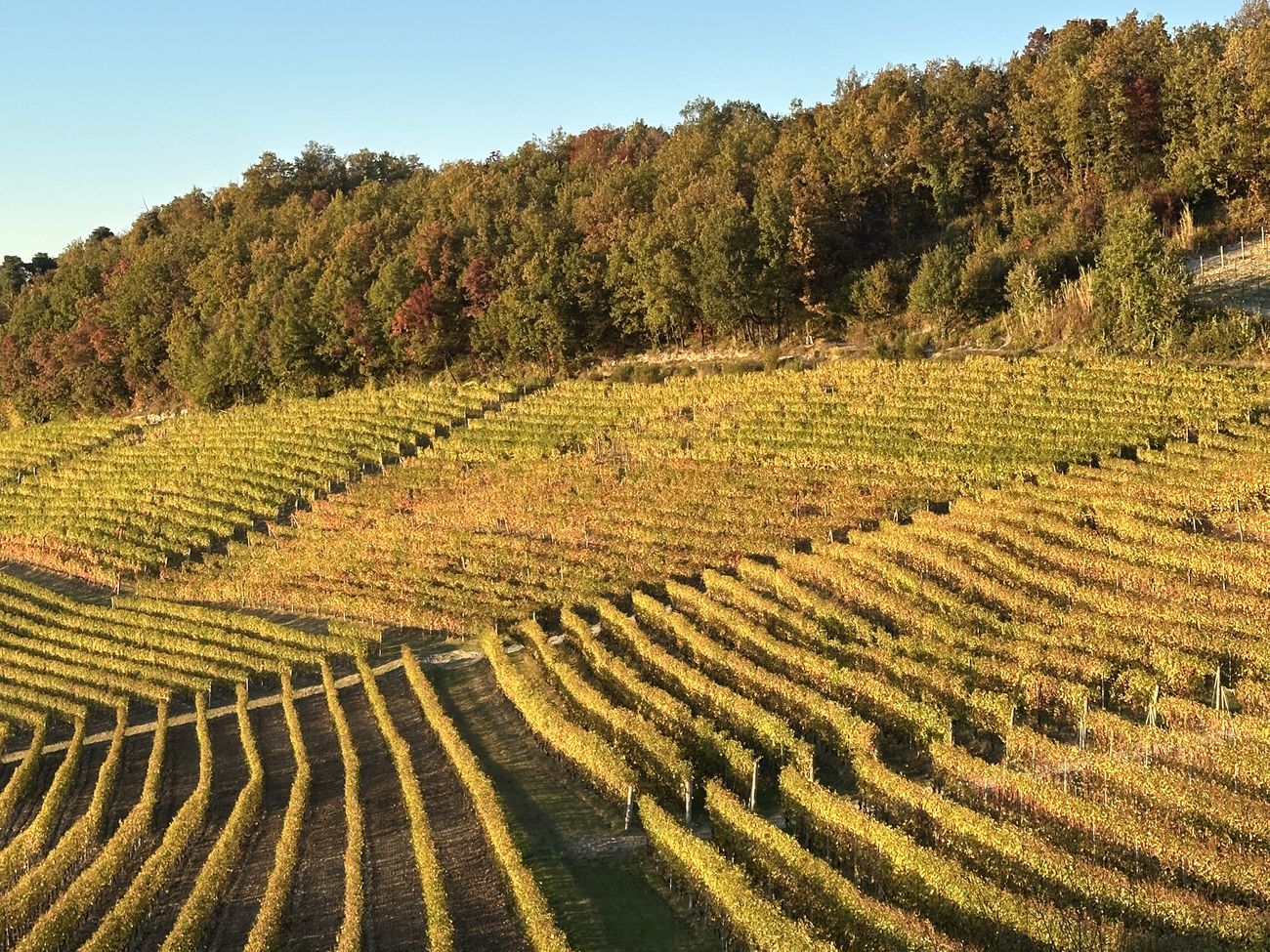
The rows of the Bricco San Pietro in autumnThe Corsini slope of Bricco San Pietro, the vines facing east
MGA · Monforte d’Alba

Bricco San Pietro cru

It’s our cru, and the farmhouse sits inside it. The Bricco San Pietro is the largest official cru in all of Barolo, and over the last decade it’s also the Monforte cru that has grown the most: in number of wines produced, in wineries involved and, to a good extent, in quality.

Area
380.09 hectares, 48% of it vineyard — the largest cru in Barolo
Altitude
255–521 metres. The hill that gives the cru its name reaches 535 metres: the third-highest point in the whole Barolo area
Grapes
Just over three quarters Nebbiolo, the rest mostly Barbera and Dolcetto
Exposure
Given its size, no single one prevails
First vintage
1978

The figures above refer to the whole cru, not just our vineyards: they’re there to give a sense of the place where we work.

The soil is sandy Sant’Agata Fossili marl, Tortonian, about ten million years old: that pale grey you recognise as you walk on it. It’s the sandy component that shows in the glass: it drains well, pushes the roots deep and gives a fine-grained tannin.

But a cru this big is not one single thing. Inside it are areas that differ greatly in tradition, geology and exposure, each with its old name: Bettola, Corsini, Cucchi, Goretta, Manzoni, Settevie, Tantesi, Viglioni.

Our vineyards lie on two different slopes of the cru, and it’s no small detail: the wines that come out of them change.

Tantesiwest slope

The western slope, the one facing Novello: it’s the other face of the hill from Corsini. Here water is never lacking and the soils change constantly — from young to evolved within a few metres, with the marl layers sometimes surfacing and sometimes lying much deeper. This slope gives our three Barolo — Barolo del Comune di Monforte, Barolo Bricco San Pietro and the Riserva — together with the Barbera d’Alba Superiore and part of the Langhe Nebbiolo.

Corsinieast slope

It faces east, and it’s the most uniform and coolest area of the whole cru. The soils are shallower than on the other slope and hold less water: two conditions that give wines with more structure and less fruit than you’d expect. Here the exposure preserves acidity, which is why on this side we keep the grapes that need freshness most: this is where the Dolcetto d’Alba and the Barbera d’Alba.
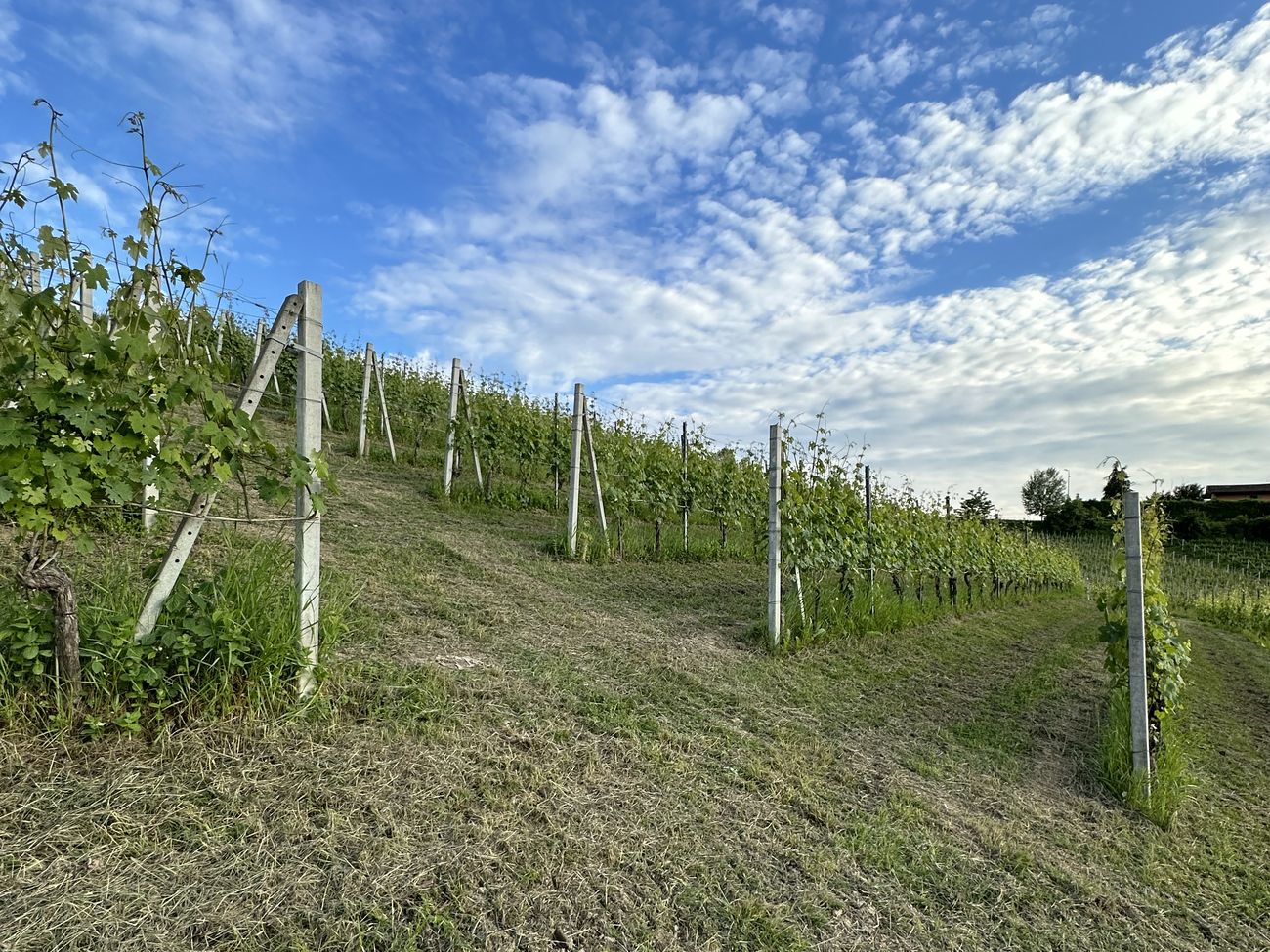
The San Giovanni vineyard in Monforte d’Alba, with grass between the rows
MGA · Monforte d’Alba

San Giovanni

The second cru where we have vines: just sixty-eight hectares, against the three hundred and eighty of the Bricco San Pietro. It lies in the valley of the Bussia stream, on the west-facing slope. We make no Barolo here: San Giovanni gives us the Langhe Nascetta, part of the Barbera d’Alba and the Langhe Nebbiolo and the grapes for the Metodo Classico.

They’re also the youngest vines on the estate. You can tell in the glass: more direct, fruit-driven wines that open up sooner and don’t ask you to wait.

Area
68.48 hectares, 62% of it vineyard
Altitude
260–400 metres
Grapes
About seven tenths Nebbiolo, with more Barbera than in the Bricco San Pietro
Exposure
East on one slope, west on the opposite one
First vintage
1995

The figures above refer to the whole cru, not just our vineyards: they’re there to give a sense of the place where we work.
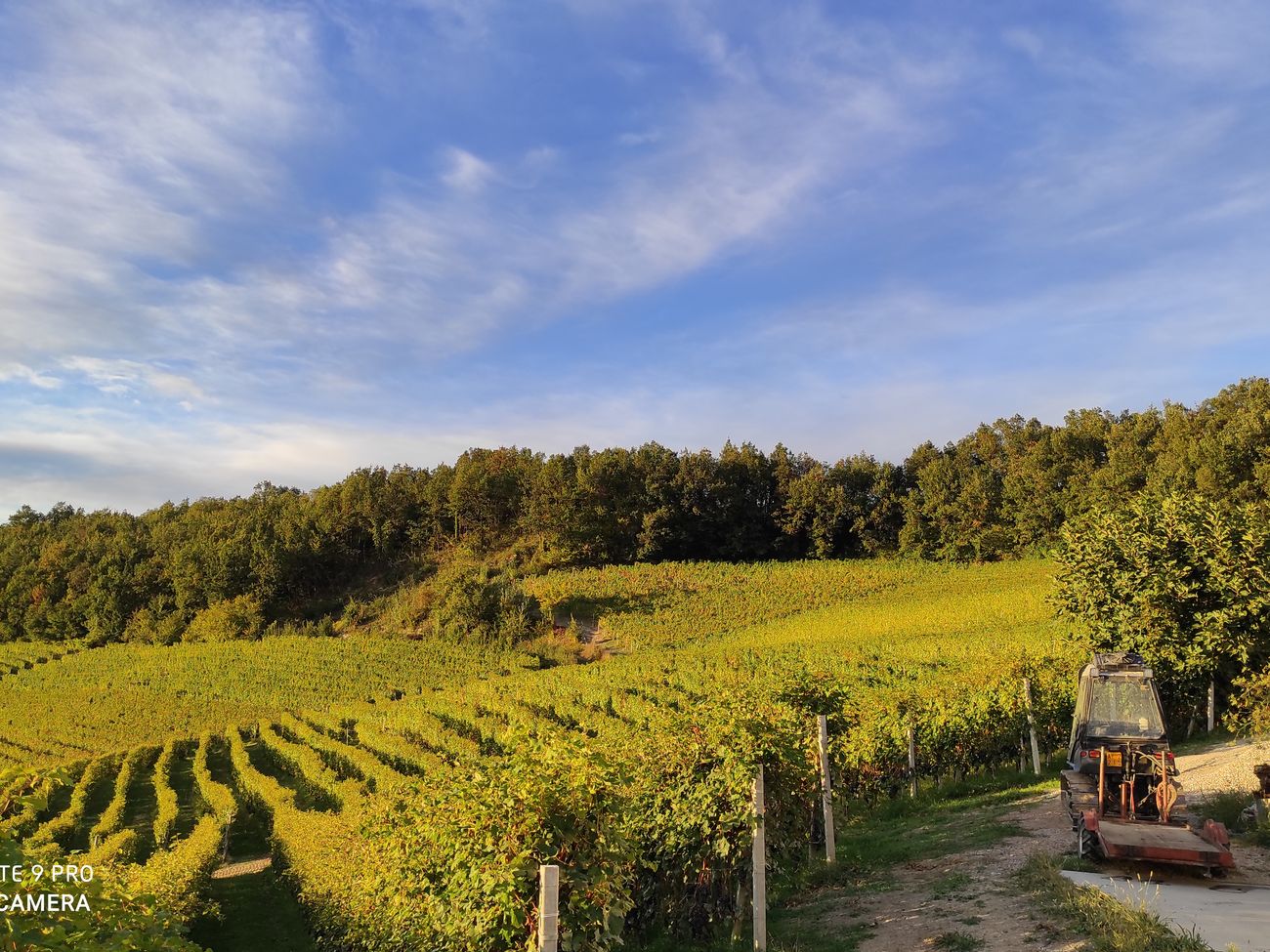
The green rows in September, before the harvest
Not only Nebbiolo

The other grapes

Nebbiolo is eighty percent. The rest of the hill is Barbera, Dolcetto, Chardonnay and Nascetta: not fillers, but the wines people in the Langhe really drink at the table every day, and which tell the story of the same land in another key.

All the vineyards are worked the same way, with no distinction between Barolo and the rest: grass between the rows, no herbicides, protection based mainly on copper and sulphur. The whole estate is certified for integrated production, audited every year by an independent body.

How we farm the vineyard
Area, altitude, exposure, first vintage and the names of the sub-zones within the Bricco San Pietro and San Giovanni crus are data from the appellation rules and regional registers, also reported in the book Barolo MGA by Alessandro Masnaghetti (Enogea). The observations on soils and on the character of the individual slopes are our own rewording of the analyses in the book. Barolo’s 181 official crus have been in force since the 2010 harvest.

The hill in cross-section

Two slopes, two different wines

The Bricco San Pietro reaches 535 metres and is the third-highest point in the Barolo area. Our vineyards sit on its two opposite sides: afternoon sun on one, morning sun on the other. That alone is enough to change the wine.

Bricco San Pietro · 535 m TANTESI west slope, towards Novello Barolo Bricco San Pietro · Riserva Barolo del Comune di Monforte Barbera Superiore · Langhe Nebbiolo water always available soils that change every few metres CORSINI east slope, the coolest Dolcetto d’Alba Barbera d’Alba shallower soils, less water more structure, less fruit WEST — afternoon sun morning sun — EAST

Our own diagram, not to scale: it shows how the vineyards are laid out on the two sides of the hill.

RAVERARAVERA PANEROLEPANEROLE ZOCCOLAIOZOCCOLAIO BUSSIABUSSIA CERVIANO–MERLICERVIANO–MERLI SOTTOCASTELLOSOTTOCASTELLODI NOVELLODI NOVELLO GRAMOLEREGRAMOLERE BOSCHETTIBOSCHETTI BRICCOBRICCOS. GIOVANNIS. GIOVANNI RIVASSIRIVASSI TERLOTERLO LE COSTE DI ROSELE COSTE DI ROSE PERNOPERNO BRICCO SAN PIETROBRICCO SAN PIETRO SAN GIOVANNISAN GIOVANNI Cascina Sòt Cascina Sòt Monforte d’Alba Monforte d’Alba N 1 km

The two crus where we have vines, Bricco San Pietro and San Giovanni, and those around them. Three hundred and eighty hectares the first, sixty-eight the second: half of our cru sits under the largest name in Barolo.
Boundaries redrawn by us from the official map of the Consorzio di Tutela Barolo Barbaresco Alba Langhe e Dogliani.

Come and see them

You understand the vineyards by walking them

The visit starts among the rows: exposures, soils, and why this hill gives one Barolo and not another.

Are you an importer, distributor or wine merchant? Write to us from the trade & export area.

Book a tastingHow the visit works